Beginner
The shape of a hand
Blinds, the button, four streets, and why the pot is a price rather than a prize.
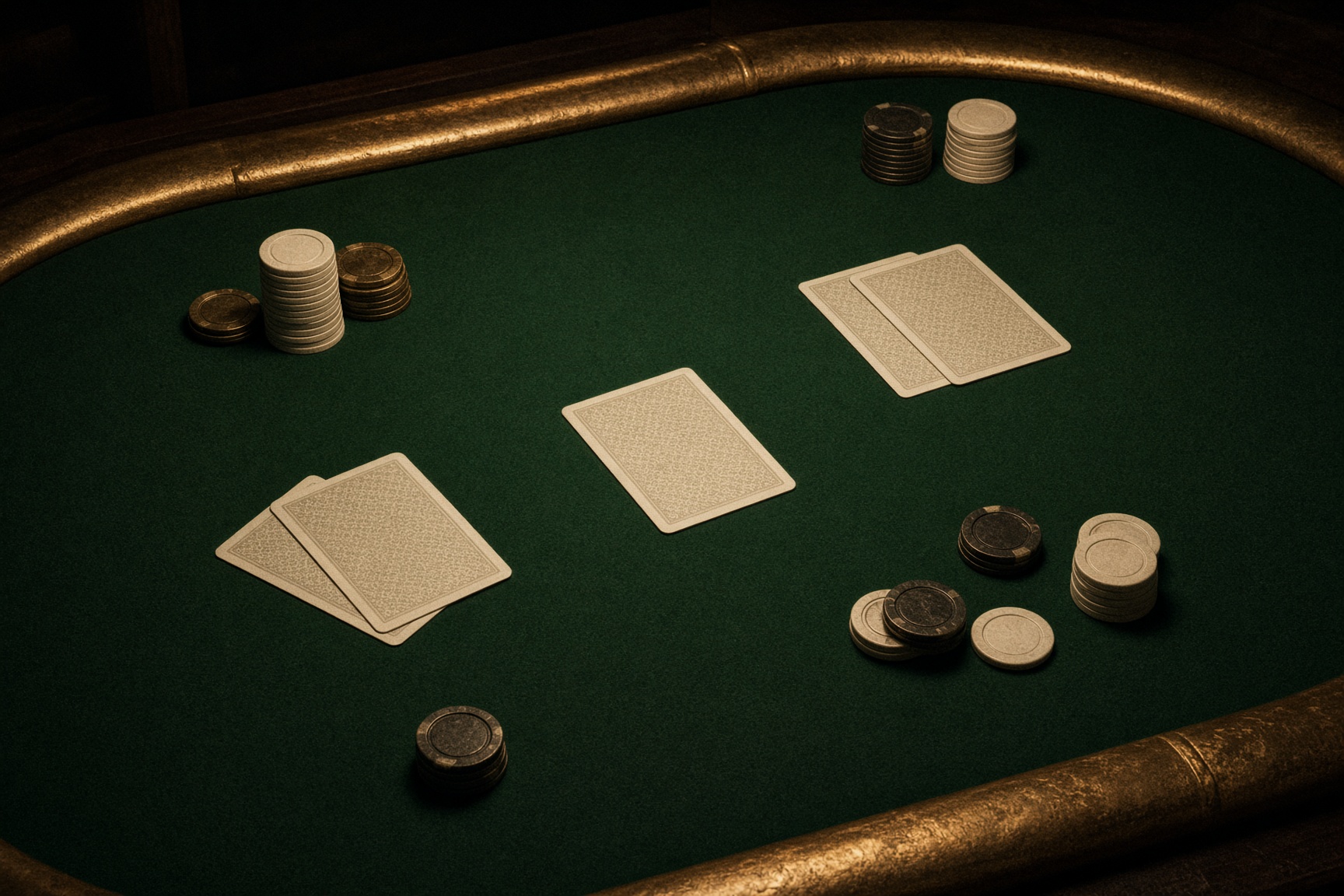
A hand of hold'em is not a story about your two cards. It is a sequence of prices. Someone posts a blind, someone raises, the board arrives in pieces, and every chip you add is a decision to buy something: a chance to win what is already there, a chance the next person folds, or a chance to see one more card. If you can name the price, you can decide. If you are only watching your own cards, the table is playing you.
FELT deals Texas hold'em, six-handed or heads-up. You always sit in the first seat. The button moves after every hand. The brass letters under your name — BTN, SB, BB, UTG, HJ, CO — are the most important print on the felt. Learn them before you learn a bluff.
The seats, in the order that matters
Six-handed, the first voluntary word belongs to the seat after the big blind. That seat is under the gun. It knows the least, because five people can still wake up with a real hand and re-raise. Then the hijack, then the cutoff, then the button. The button is last to act on the flop, the turn, and the river. That is the privilege. It is not luck, and it is not a sticker. It is the right to see what the other person does before you choose.
The blinds are different. They already have chips in the middle that they did not choose to put there. The small blind will act first for the rest of the hand if they call, which is why calling from the small blind is one of the most expensive habits in the game. The big blind already posted a full blind, so the price to see a flop is shorter, and defending a wider range from there is sane. Defending is not the same as opening. Opening means you raised before anyone else put money in on purpose.
Heads-up, the geometry flips once and then settles. The button is also the small blind. It acts first before the flop and last on every later street. The coach opens that seat to three big blinds, not two and a half, because the preflop position is worse and the postflop position is the whole edge. Do not import a six-max chart into a heads-up match and expect it to fit.
Four streets, four different questions
Preflop is two hole cards and the blinds. The question is whether this hand, from this seat, against the players still waiting to act, is worth a raise. The flop is three community cards. Draws are born here, and a lot of one-pair hands are already as good as they are going to get. The turn is one card. The price of a draw changes because only one card remains, and the pot is usually larger, so the same bet size is a bigger decision. The river is the fifth card. Nothing can improve after it. A bet on the river is value or a bluff. There is no third category called "seeing it."

Money already in the middle is not yours. The only chip that matters is the next one.
The blinds feel like an investment. They are rent. Once they are posted they belong to the pot, and the pot does not remember that they used to be yours. Continuing because "I already have chips in" is how a forced bet becomes a voluntary loss. This table measures that mistake. VPIP is the share of hands where you put money in beyond the blinds. PFR is the share where you raised before the flop. A high VPIP and a low PFR is the fingerprint of someone who paid rent and then paid it again just to look at a flop.
What the coach is actually saying
When it is your turn and the eye is open, the coach shows a mix, not a command. A bar at 70 and a bar at 30 means a regular takes the first line about seven times in ten and the second line the rest. You have one instance. The larger bar is the default. The smaller bar is the line you take when you have a reason — the room calls too much, or this card is scary, or you are in position and a cheap bluff has a fold to aim at. The estimate beside the mix, once the flop is out, is a regular's read of the hand: overpair, top pair, flush draw. It is not a solved equity against a perfect range. Use it as a price check, which the next piece in this journal does slowly and out loud.
The pot figure in the middle already includes the live bets. When someone is all-in for less, the extra chips to the side are not fully yours to win, and the coach's price gets a little stricter in a multiway pot for that reason. You do not need the side-pot math on day one. You need to notice that three players in a pot is not two players with an audience.
Next · BeginnerCards worth openingThe same open chart the coach uses, and the pretty hands that are still folds.